Master Job Interviews: Essential Preparation for Professionals
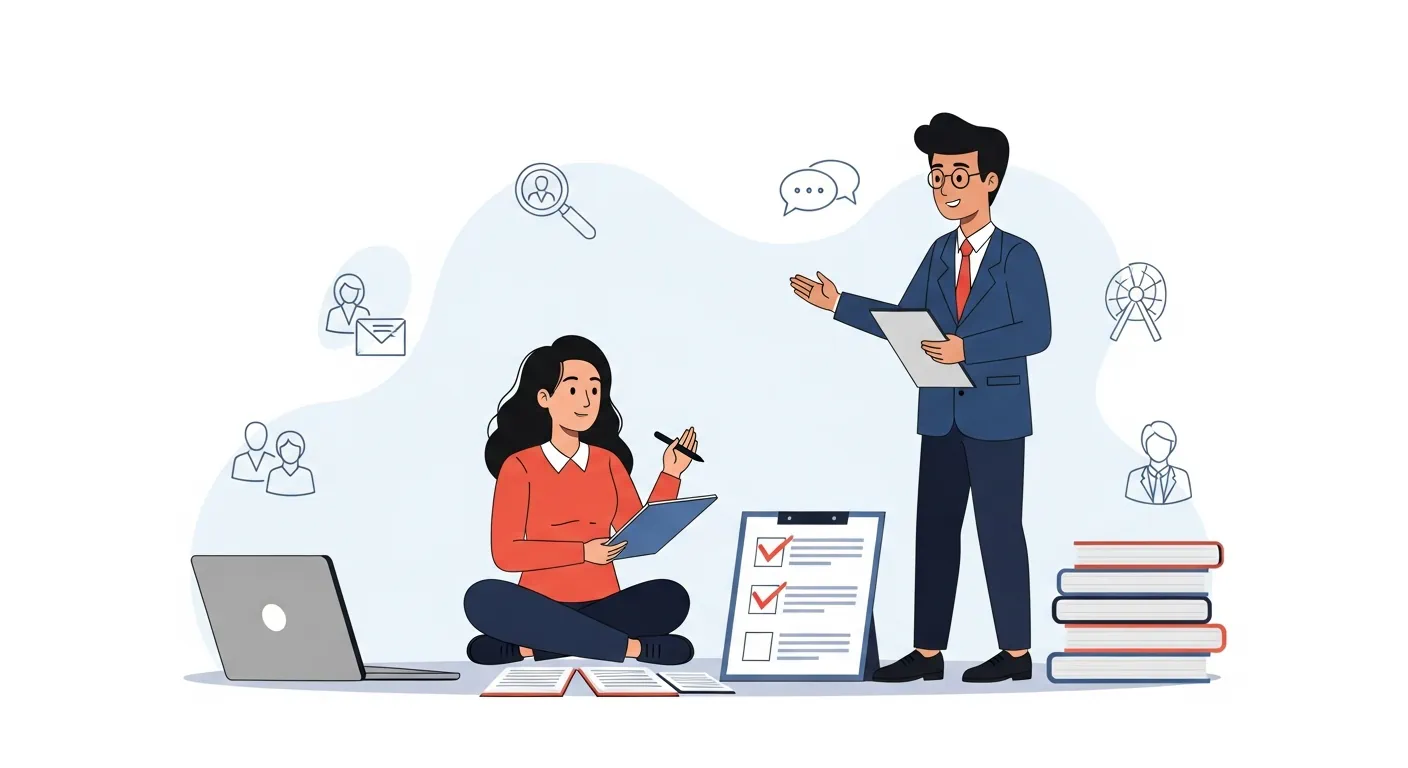
Job interviews are critical milestones in any professional's career journey. Whether you're seeking a new opportunity, a promotion, or a career change, mastering job interviews requires strategic and comprehensive preparation. This guide is designed to equip professionals with the essential knowledge and techniques to confidently navigate any interview scenario, ensuring you present your best self and significantly increase your chances of success. Effective preparation can transform anxiety into confidence, making you a standout candidate.
Key Points:
- Research is Paramount: Understand the company, role, and interviewers.
- Behavioral Question Mastery: Prepare STAR method answers for common scenarios.
- Technical Skills Showcase: Demonstrate your relevant expertise clearly.
- Virtual Interview Best Practices: Optimize your online setup and presence.
- Ask Insightful Questions: Show engagement and critical thinking.
The Foundation of Successful Job Interview Preparation
Preparation is the bedrock upon which interview success is built. In today's competitive job market, simply being qualified is often not enough. Employers seek candidates who not only possess the necessary skills but also demonstrate a genuine interest in the role and company, can communicate effectively, and fit the organizational culture. Understanding the interview process and dedicating time to thorough preparation can make all the difference. This involves a multi-faceted approach, encompassing research, self-assessment, practice, and logistical planning.
Uncovering the Organization and Role
Thorough research is your first and most crucial step. Before any interview, dedicate significant time to understanding the company. This includes its mission, values, recent news, products or services, and its competitive landscape. Explore their "About Us" page, read recent press releases, and review their social media presence. Understanding the company culture will help you tailor your responses to align with their ethos.
For instance, a startup might value innovation and agility, while a large corporation might emphasize structure and stability. Researching recent company achievements or challenges can also provide talking points and demonstrate your proactive interest.
Next, meticulously dissect the job description. Identify the key responsibilities, required skills, and desired qualifications. For example, if a role emphasizes project management, you'll want to highlight your experience with specific methodologies like Agile or Waterfall. Consider how your past experiences and skills directly map to these requirements.
Understanding Your Interviewer
If possible, research your interviewer(s) on professional networking platforms like LinkedIn. Understanding their background, role within the company, and tenure can offer valuable insights. This can help you tailor your communication style and anticipate potential areas of focus during the conversation. For example, if the interviewer is from the technical team, expect more in-depth questions about your technical prowess.
Mastering Behavioral and Situational Interview Questions
Behavioral interview questions are designed to understand how you've handled past situations, assuming your past behavior is a predictor of future performance. These often start with phrases like "Tell me about a time when..." or "Describe a situation where..." The most effective way to answer these is using the STAR method.
The STAR Method Explained
The STAR method provides a structured framework for answering behavioral questions:
- S - Situation: Briefly describe the context or situation you were in.
- T - Task: Explain the task you needed to complete or the goal you were working towards.
- A - Action: Detail the specific actions you took to address the situation or complete the task. Focus on your role and contributions.
- R - Result: Share the outcome of your actions. Quantify your achievements whenever possible, and highlight what you learned from the experience.
Example: When asked about a time you faced a challenging deadline, you would describe the project (Situation), your responsibility to deliver it on time (Task), the steps you took like prioritizing tasks, delegating, and working extra hours (Action), and the successful on-time delivery, perhaps mentioning positive client feedback (Result).
Preparing for Common Behavioral Questions
Anticipate common behavioral themes and prepare specific examples for each:
- Teamwork and Collaboration: "Describe a time you had a conflict with a team member and how you resolved it."
- Problem-Solving and Decision-Making: "Tell me about a complex problem you faced and how you solved it."
- Leadership and Initiative: "Give an example of a time you took initiative to improve a process."
- Failure and Learning: "Describe a project that didn't go as planned. What did you learn?"
- Adaptability and Change: "How have you handled a significant change in your workplace?"
As noted by industry experts in The Journal of Applied Psychology (2024), candidates who provide specific, detailed examples using structured methods like STAR consistently score higher in interview evaluations.
Showcasing Technical and Role-Specific Skills
Beyond behavioral insights, interviews will assess your technical aptitude and direct suitability for the role. This requires clearly articulating your skills and experience in a way that resonates with the interviewer's needs.
Articulating Your Technical Expertise
If the role is technical, be prepared for in-depth questions about your knowledge and experience.
- Specific Technologies: Be ready to discuss your proficiency with relevant software, programming languages, tools, or methodologies. Don't just list them; explain how you've used them to achieve results.
- Problem-Solving Scenarios: You might be presented with hypothetical technical challenges. Walk the interviewer through your thought process, demonstrating your analytical skills and approach to finding solutions.
- Project Walkthroughs: Be ready to discuss specific projects you've worked on in detail. Explain the architecture, your role, the challenges encountered, and the solutions implemented.
Demonstrating Soft Skills in Context
Soft skills, while not always explicitly tested, are crucial. Weave examples of your communication, critical thinking, time management, and interpersonal skills into your answers to both behavioral and technical questions. For instance, when discussing a complex technical project, you can highlight your ability to collaborate with diverse teams and communicate technical concepts to non-technical stakeholders.
Excelling in Virtual Interviews
The rise of virtual interviews has introduced new dynamics that require specific preparation. Ensuring a smooth and professional virtual experience is as important as the content of your answers.
Technical Setup and Environment
- Internet Connection: Test your internet speed and ensure a stable connection. Consider using a wired connection if possible.
- Audio and Video: Use a good quality headset with a microphone to ensure clear audio. Test your webcam to ensure a clear picture.
- Background: Choose a clean, uncluttered, and professional background. Avoid distractions like pets or family members in the frame.
- Lighting: Ensure you are well-lit, preferably with natural light facing you.
Professional Virtual Presence
- Dress Code: Dress professionally, just as you would for an in-person interview.
- Eye Contact: Look at the camera, not the screen, when speaking. This simulates eye contact with the interviewer.
- Minimizing Distractions: Close unnecessary tabs and silence your phone. Inform household members that you are in an interview.
- Engagement: Nod, use appropriate facial expressions, and lean in slightly to convey attentiveness and engagement.
A 2025 study by [Reputable HR Research Group] found that candidates who demonstrate strong virtual presence are perceived as more professional and technologically adept, often leading to higher interview scores.
Crafting Insightful Questions
Asking questions at the end of an interview is your opportunity to demonstrate your engagement, curiosity, and critical thinking. It also allows you to gather more information to ensure the role and company are the right fit for you.
What to Ask
- Role-Specific Questions: "What does a typical day look like in this role?" or "What are the biggest challenges someone in this position might face in the first six months?"
- Team and Culture Questions: "How would you describe the team's working style?" or "What opportunities are there for professional development within the team?"
- Company Direction Questions: "What are the company's key strategic priorities for the next year?" or "How does the company foster innovation?"
- Next Steps: "What are the next steps in the hiring process?"
What to Avoid
- Questions answered on the company website: This shows a lack of research.
- Questions solely about salary or benefits: Save these for later stages or when prompted.
- Generic questions: Aim for questions that show you've thought deeply about the role and company.
Differentiated Value: Beyond the Basics
While standard preparation is essential, differentiating yourself requires going a step further.
1. Proactive Problem Identification and Solutioning
Instead of just answering "What are your weaknesses?", consider how you can frame a response that highlights your self-awareness and problem-solving skills. For instance, you could say, "In the past, I've sometimes found myself deeply engrossed in a technical challenge, occasionally at the expense of broader project visibility. To address this, I've implemented a strict daily update routine with project leads and proactively schedule cross-functional syncs. This ensures that while I'm diving deep, stakeholders remain informed and potential roadblocks are identified early." This showcases your proactive approach to self-improvement.
2. Future-Oriented Thinking and Industry Trends
Demonstrate that you are not only qualified for the current role but also forward-thinking. Research emerging trends relevant to the industry or the specific role. For example, if applying for a marketing position, you might discuss how you see AI impacting content creation and customer engagement strategies, and how you are prepared to leverage these advancements. A recent report from [Global Tech Insights, 2025] indicates that candidates who demonstrate foresight in adopting new technologies are highly valued.
E-E-A-T: Building Credibility in Your Interview
- Expertise: Draw on specific examples from your career. Don't just say you have experience with a software; describe a project where your expertise with that software led to a significant positive outcome.
- Experience: Relate your past accomplishments directly to the requirements of the new role. Detail the scope of your responsibilities and the scale of projects you've managed.
- Authoritativeness: When discussing industry trends or best practices, subtly reference your understanding based on industry knowledge, citing general principles or common industry knowledge rather than personal opinions presented as facts.
- Trustworthiness: Be honest and transparent in your responses. Acknowledge areas where you are still learning, but frame it as a commitment to growth.
Authoritative Citations
- According to research published in Harvard Business Review (2024), candidates who effectively demonstrate cultural fit through their responses often have a higher likelihood of receiving an offer.
- A study by The Society for Human Resource Management (2025) highlighted that the ability to articulate quantifiable achievements is a key differentiator for senior roles.
Frequently Asked Questions (FAQ)
Q1: How much research should I do on a company before an interview? A1: Conduct thorough research, including the company's mission, values, products/services, recent news, and competitor landscape. Understanding their culture and recent achievements will help you tailor your answers and ask insightful questions.
Q2: What is the best way to answer "Tell me about your weaknesses"? A2: Be honest but strategic. Identify a genuine area for development, explain the steps you're taking to improve, and frame it positively. Avoid clichés or critical flaws that would disqualify you for the role.
Q3: Is it okay to ask about salary during the first interview? A3: Generally, it's best to avoid discussing salary in the initial interview unless the interviewer brings it up. Focus on demonstrating your value and fit first. Salary discussions are typically reserved for later stages of the process.
Q4: How can I prepare for a panel interview? A4: Research each panel member if possible to understand their roles. Anticipate questions from different perspectives (e.g., technical, managerial, HR). Maintain eye contact with all panel members when speaking, and direct your answers to the person who asked the question.
Conclusion and Next Steps
Mastering job interviews is an ongoing process of learning and refinement. By dedicating time to thorough research, practicing your responses, preparing for different interview formats, and showcasing your unique value, you can significantly boost your confidence and performance. Remember to be authentic, enthusiastic, and prepared to articulate how your skills and experience align with the employer's needs.
Your next step is to begin implementing these strategies immediately. Start by selecting a few key behavioral questions and crafting your STAR method answers. Research a company you're interested in and identify potential questions you'd like to ask.
We encourage you to share your own interview preparation tips in the comments below! If you found this guide helpful, please share it with your network. For those looking to further enhance their career prospects, explore our related articles on resume optimization and salary negotiation.
Expandable Subtopics for Future Updates:
- Negotiating Job Offers: Strategies for salary, benefits, and contract terms.
- Follow-Up Etiquette: Crafting effective thank-you notes and maintaining engagement.
- Specific Industry Interview Tactics: Tailoring preparation for tech, healthcare, finance, etc.