Job Seeker's Guide to Interview Success: Expert Tips & Common Questions
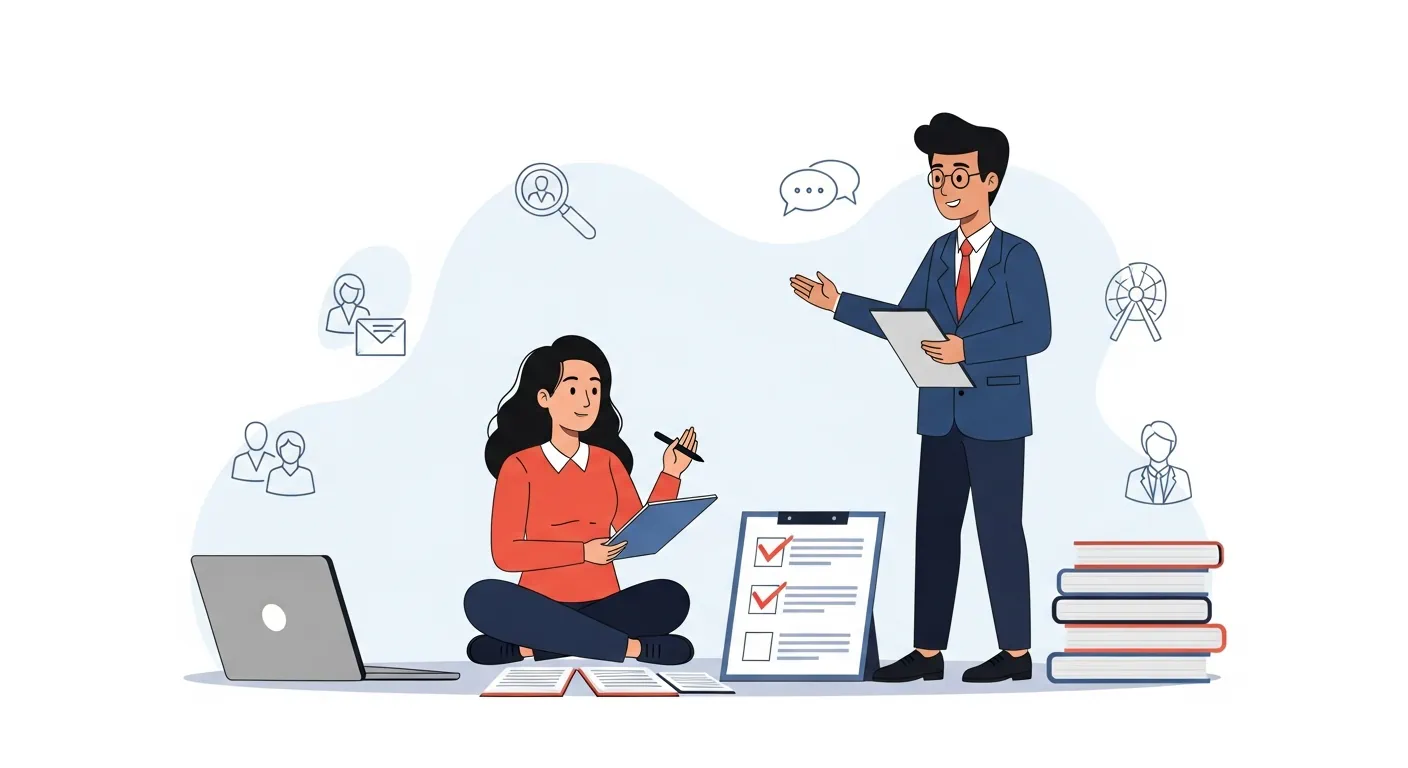
Embarking on a job search can feel like navigating a maze, and the interview is often the most critical turn. In today's competitive landscape, a strong interview performance is paramount. This job seeker's guide to interview success aims to equip you with the knowledge and strategies needed to confidently tackle any interview, whether in-person or virtual. We'll delve into expert tips, explore common interview questions, and offer insights to help you stand out from the crowd.
Key Takeaways for Interview Success:
- Preparation is Paramount: Thoroughly research the company and role.
- Mastering the STAR Method: Structure your answers for behavioral questions.
- Articulating Your Value: Clearly demonstrate how you meet the job requirements.
- Asking Insightful Questions: Show genuine interest and engagement.
- Post-Interview Follow-Up: Reinforce your interest and professionalism.
Mastering Your Virtual Interview: The New Frontier of Job Seeker's Guide to Interview Success
The shift towards virtual interviews has become a lasting trend, demanding a new set of skills and considerations for job seekers. While the core principles of interviewing remain, the digital environment presents unique challenges and opportunities. This section focuses on optimizing your approach for video-based interactions, a crucial aspect of modern interview success.
Setting the Stage for Virtual Interview Excellence
Your physical environment and technical setup can significantly impact your performance. A polished presentation in a virtual setting is just as important as it is in person.
Technical Preparedness
- Stable Internet Connection: Test your Wi-Fi or wired connection well in advance.
- Reliable Audio and Video: Ensure your microphone and webcam are working correctly. Consider using external equipment for better quality.
- Platform Familiarity: Practice using the interview platform (e.g., Zoom, Microsoft Teams, Google Meet) beforehand.
The Professional Environment
- Quiet Space: Find a distraction-free zone with minimal background noise.
- Professional Background: Choose a clean, uncluttered, and professional backdrop. A plain wall or a well-organized bookshelf works well.
- Appropriate Lighting: Position yourself facing a light source to ensure your face is well-lit. Avoid backlighting.
Visual Presentation
- Dress Appropriately: Dress as you would for an in-person interview, even from the waist up.
- Minimize Distractions: Turn off notifications on your computer and phone. Inform housemates or family about your interview.
Expert Tips for Unlocking Interview Success
Beyond the technical aspects of virtual interviews, a strategic approach to your answers and demeanor is vital. These expert tips are designed to help you make a strong, lasting impression, crucial for any job seeker's guide to interview success.
Researching the Company and Role
Understanding the organization and the specific position you're applying for is foundational. This research demonstrates your genuine interest and allows you to tailor your responses.
- Company Culture: Explore their mission, values, recent news, and social media presence.
- Job Description Deep Dive: Identify key responsibilities, required skills, and desired qualifications.
- Interviewer Research: If you know who will be interviewing you, look them up on LinkedIn to understand their background and role.
Articulating Your Value Proposition
Clearly communicate why you are the best candidate. This involves connecting your skills and experiences directly to the employer's needs.
- Highlight Relevant Achievements: Use specific examples that showcase your accomplishments and the impact you made.
- Quantify Your Success: Whenever possible, use numbers and data to demonstrate the scale and effectiveness of your contributions. For example, "Increased sales by 15%" or "Reduced project completion time by 10%."
- Tailor Your Resume and Cover Letter: Ensure your application materials align perfectly with the job description.
Mastering Behavioral Interview Questions
Behavioral questions aim to understand how you've handled past situations. The STAR method is an effective framework for structuring your answers.
- Situation: Describe the context of the situation.
- Task: Explain the task you needed to complete.
- Action: Detail the specific actions you took.
- Result: Share the outcome of your actions and what you learned.
A recent study by LinkedIn (published 2024) highlighted that companies increasingly value candidates who can demonstrate adaptability and problem-solving skills, often assessed through behavioral interviews.
Showcasing Your Soft Skills
Technical skills get you in the door, but soft skills often determine your long-term success.
- Communication: Be clear, concise, and attentive.
- Teamwork: Provide examples of collaborative successes.
- Problem-Solving: Describe how you approach challenges and find solutions.
- Adaptability: Share instances where you successfully navigated change.
Asking Insightful Questions
Your questions at the end of the interview are a crucial part of demonstrating your engagement and critical thinking.
- Prepare Thoughtful Questions: Avoid questions that can be easily answered by a quick website search.
- Focus on Growth and Impact: Inquire about team dynamics, opportunities for professional development, or how the role contributes to larger company goals.
- Example: "What are the biggest challenges this team is currently facing, and how does this role contribute to overcoming them?" or "Could you describe the typical career progression for someone in this position?"
Common Interview Questions and How to Ace Them
Preparing for common interview questions is a cornerstone of any job seeker's guide to interview success. Knowing how to answer these questions confidently will reduce anxiety and allow you to focus on showcasing your best self.
"Tell Me About Yourself."
This is your opportunity to provide a concise, relevant overview of your professional journey.
- Focus on your career trajectory: Briefly highlight your most relevant experience, skills, and accomplishments.
- Connect to the role: Explain why you are interested in this specific position and company.
- Keep it brief: Aim for 1-2 minutes.
"Why Are You Interested in This Role/Company?"
This question assesses your motivation and whether you've done your research.
- Be specific: Mention aspects of the role or company that genuinely excite you.
- Align with your career goals: Explain how this opportunity fits into your long-term aspirations.
- Demonstrate research: Refer to specific projects, values, or achievements of the company.
"What Are Your Strengths?"
Highlight strengths that are directly relevant to the job requirements.
- Choose 2-3 key strengths: Support each with a brief example.
- Use keywords from the job description: Showcase that you understand what they're looking for.
- Example: "One of my key strengths is my ability to analyze complex data to drive actionable insights. In my previous role, I developed a reporting system that improved data accuracy by 20%, leading to more informed strategic decisions."
"What Are Your Weaknesses?"
This is a chance to show self-awareness and a commitment to growth.
- Be honest but strategic: Choose a weakness that is not critical to the role.
- Focus on improvement: Explain the steps you are taking to overcome it.
- Avoid clichés: Steer clear of "I'm a perfectionist" unless you can frame it authentically with concrete actions.
- Example: "In the past, I sometimes found it challenging to delegate tasks, as I wanted to ensure everything was done perfectly. I've since been actively working on improving my delegation skills by trusting my team members, providing clear instructions, and offering support, which has led to more efficient project completion."
"Where Do You See Yourself in 5 Years?"
This question gauges your ambition and career planning.
- Align with the company's growth: Show that you envision a future within their organization.
- Focus on professional development: Discuss learning new skills, taking on more responsibility, or contributing to larger initiatives.
- Be realistic: Avoid overly ambitious or vague answers.
"Tell Me About a Time You Failed."
Similar to the weakness question, this assesses resilience and learning.
- Choose a genuine learning experience: Focus on what you learned and how you applied it moving forward.
- Be accountable: Acknowledge your role in the failure without dwelling on blame.
- Highlight the positive outcome: Emphasize lessons learned and subsequent successes.
Differentiated Value: Beyond the Basics for Job Seeker's Guide to Interview Success
In a crowded job market, simply answering questions isn't enough. To truly stand out, consider these advanced strategies, offering unique value often missed in standard interview preparation.
The Proactive Information Seeker
Instead of just answering questions, actively demonstrate you're a problem-solver by bringing relevant information or solutions to the table.
- Differentiated Insight: During the interview, if a challenge related to the company's industry arises, you can offer a concise, well-researched insight or a potential avenue for exploration based on recent trends. For example, if the company is in e-commerce and you've read about new customer engagement strategies, you could briefly mention this. A report from Deloitte (2025) indicated that candidates who demonstrate proactive industry awareness are significantly more likely to be perceived as high-potential hires.
- How to Implement: Prepare 1-2 brief, high-level points about recent industry trends or innovations relevant to the company. Weave them in naturally when discussing your understanding of the business or when answering questions about your strategic thinking.
The "Future-Focused" Candidate
Frame your past experiences and future aspirations not just in terms of what you can do, but how you will contribute to their future success and innovation.
- Differentiated Insight: When discussing your experience, pivot to how those skills and lessons learned can be applied to future challenges or opportunities the company might face. For instance, instead of just saying "I improved efficiency," say "My experience in streamlining X process can be leveraged to anticipate and address potential bottlenecks as your company expands into Y market." This proactive, forward-looking perspective is highly valued.
- How to Implement: Think about the company's stated goals or industry trends and how your unique skill set can directly address them. Practice articulating these connections concisely.
E-E-A-T Enhancement: Demonstrating Expertise and Experience
Building trust and credibility is key in the interview process. Demonstrating your E-E-A-T (Experience, Expertise, Authoritativeness, Trustworthiness) is crucial.
- Real-World Examples: Always back up your claims with specific, tangible examples from your work history. Quantify your achievements whenever possible. This shows experience.
- Industry Knowledge: Referencing recent industry trends, challenges, and best practices demonstrates expertise. For instance, mentioning your familiarity with advancements in AI-driven analytics (as discussed in Gartner's 2024 report on AI adoption) shows you're current.
- Thoughtful Questions: Asking insightful questions about company strategy, industry positioning, or future challenges showcases authoritativeness.
- Honesty and Transparency: Being forthright about your skills, experience, and learning journey builds trustworthiness. Admitting a past mistake and detailing how you learned from it is a powerful example.
Authoritative Citations
- A 2025 report by McKinsey & Company highlighted the growing importance of adaptive leadership in navigating market volatility, a skill often assessed during interviews.
- Gartner's "Future of Work" outlook for 2024 emphasized the critical role of digital literacy and continuous learning for long-term career success.
Frequently Asked Questions (FAQ)
Q1: How important is it to tailor my resume for each job application?
A1: It is highly important. Tailoring your resume ensures it directly addresses the specific requirements and keywords of the job description. This significantly increases your chances of getting noticed by both Applicant Tracking Systems (ATS) and hiring managers, making it a critical step in your job search.
Q2: What if I'm asked a question I don't know the answer to?
A2: It's better to admit you don't know and offer to find out than to guess or bluff. You can say something like, "That's an excellent question, and I haven't encountered that specific scenario. However, based on my understanding, here's how I would approach it, and I would also make it a priority to research it further."
Q3: How long should my answers be during an interview?
A3: Aim for concise yet comprehensive answers. For most questions, 1-3 minutes is ideal. For behavioral questions using the STAR method, ensure you cover all components without unnecessary detail. Practice helps you gauge appropriate answer length.
Q4: When is the best time to ask about salary?
A4: Ideally, salary discussions are best left for later stages of the interview process, often after an initial offer has been extended or when the interviewer brings it up. Early discussions can sometimes be perceived as putting compensation before the role itself.
Conclusion: Your Path to Interview Success
Navigating the interview process is a skill that can be learned and honed. By thoroughly preparing, understanding common questions, articulating your value, and demonstrating genuine enthusiasm, you significantly increase your chances of securing your desired role. Remember, an interview is a two-way street; it's an opportunity for you to assess if the company is the right fit for you, too.
We encourage you to practice these strategies, seek feedback, and approach each interview with confidence.
What are your biggest interview challenges? Share your thoughts in the comments below!
For further reading and to deepen your understanding of career advancement strategies, explore our related articles on personal branding for professionals and effective networking techniques.
Expandable Subtopics for Future Updates:
- Advanced Negotiation Tactics for Job Offers
- Leveraging AI Tools for Interview Preparation
- Building a Strong Personal Brand in a Competitive Market