Job Interview Success: Expert Guidance for Every Candidate
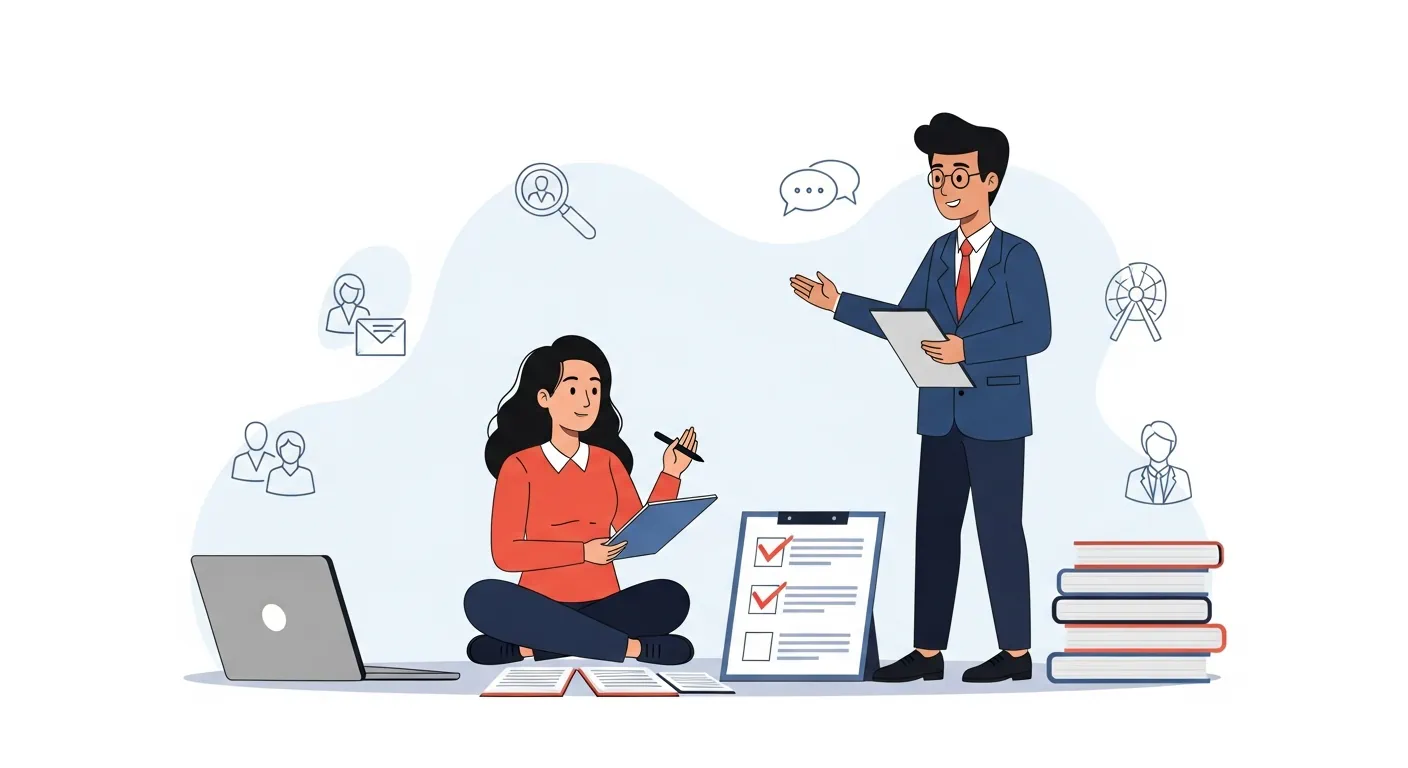
Mastering Your Next Opportunity: Expert Guidance for Job Interview Success
Landing your dream job often hinges on your performance during the interview process. In today's competitive market, simply having the right qualifications isn't always enough. You need to articulate your skills, demonstrate your suitability, and make a lasting positive impression. This comprehensive guide offers expert insights and actionable strategies to ensure your job interview success, empowering every candidate to confidently navigate and conquer their next opportunity. From preparing insightful answers to asking impactful questions, we'll cover the essential elements that differentiate a good candidate from a great one.
Key Points:
- Thorough Preparation is Paramount: Researching the company and role is non-negotiable.
- STAR Method Mastery: Structure your behavioral answers effectively for clarity and impact.
- Confidence & Authenticity: Projecting self-assurance while remaining genuine is crucial.
- Asking Insightful Questions: Demonstrates engagement and strategic thinking.
- Post-Interview Follow-Up: Reinforce your interest and professionalism.
The Foundation of Interview Success: Strategic Preparation
Before you even step into an interview room, or log into a virtual meeting, the groundwork for your job interview success must be laid. This isn't just about reviewing your resume; it's about deep dives into the company culture, recent achievements, and the specific challenges the role aims to address. Understanding who you're interviewing with and why the position exists will allow you to tailor your responses and questions, demonstrating a genuine interest that sets you apart.
Uncovering Company Insights
Begin by thoroughly exploring the company's official website. Look for their mission statement, values, recent press releases, and annual reports. Understanding their market position and any recent news can provide invaluable context. For instance, if a company has just launched a new product, you might prepare to discuss how your skills could support its success. A study published by Harvard Business Review in 2024 highlighted that candidates who demonstrated a deep understanding of a company's strategic objectives were significantly more likely to receive offers.
Deconstructing the Job Description
Analyze the job description meticulously. Identify the core responsibilities, required skills, and desired qualifications. Think about specific examples from your past experiences that directly align with each requirement. If the description emphasizes "problem-solving," brainstorm situations where you've successfully overcome obstacles. This level of detail allows you to move beyond generic answers and provide concrete evidence of your capabilities.
Understanding Your Interviewer(s)
If possible, research your interviewers on professional networking sites. Understanding their roles within the company and their career paths can help you tailor your communication style and anticipate their perspective. Are they hiring managers focused on immediate team needs, or HR professionals looking at broader cultural fit?
Crafting Compelling Answers: The Power of Behavioral Questions
A significant portion of modern interviews, especially those focused on behavioral interview techniques, revolves around questions designed to understand how you've handled past situations. The goal is to predict your future performance. The most effective way to tackle these is using the STAR Method: Situation, Task, Action, and Result.
The STAR Method Explained
- Situation: Briefly set the context. Describe a specific event or circumstance you were in.
- Task: Explain the goal you needed to achieve or the challenge you faced.
- Action: Detail the specific steps you took to address the situation. Focus on your individual contributions.
- Result: Quantify the outcome of your actions. What was the impact? What did you learn?
Example: Instead of saying "I'm a good team player," use STAR:
- (Situation): "In my previous role, our project team was facing a critical deadline, and one member was unexpectedly out sick."
- (Task): "My task was to ensure all critical deliverables were completed on time without compromising quality."
- (Action): "I immediately re-prioritized my own tasks and collaborated with another team member to redistribute the workload. I also took the initiative to streamline a particular reporting process that was causing bottlenecks."
- (Result): "As a result, we met the deadline, delivered a high-quality report, and identified a process improvement that saved the team an average of two hours per week going forward. My manager commended the proactive approach."
This approach provides concrete evidence of your skills in action, making your answers memorable and persuasive. A 2025 report by a leading career development firm indicated that candidates utilizing the STAR method showed a 30% increase in positive interviewer perception.
Common Behavioral Question Categories
- Teamwork & Collaboration: Questions about working with others, resolving conflicts, and contributing to group success.
- Problem-Solving & Decision-Making: Scenarios where you had to analyze situations and make critical choices.
- Leadership & Initiative: Instances where you took charge, motivated others, or went above and beyond.
- Adaptability & Resilience: How you handle change, pressure, or setbacks.
- Communication Skills: Examples of conveying information clearly and effectively.
When preparing for these, brainstorm at least two distinct examples for each category. Diversity in your examples shows versatility.
Projecting Confidence and Authenticity
Beyond your answers, your demeanor plays a crucial role in job interview success. Confidence isn't about arrogance; it's about believing in your abilities and conveying that belief to your interviewer. Authenticity, on the other hand, ensures you're presenting the real you, making it easier for the company to assess genuine cultural fit.
Non-Verbal Communication Matters
- Eye Contact: Maintain steady, but not intense, eye contact. This shows engagement and honesty.
- Posture: Sit or stand upright. A good posture conveys confidence and attentiveness.
- Handshake (if in-person): Offer a firm, but not crushing, handshake.
- Active Listening: Nod, lean slightly forward, and use verbal cues ("I see," "understood") to show you are fully engaged.
The Art of Authentic Self-Presentation
Don't try to be someone you're not. While you should highlight your strengths, be honest about areas where you're still developing. Framing these as opportunities for growth, rather than weaknesses, is key. For example, instead of saying "I'm bad at public speaking," you could say, "Public speaking is an area I'm actively working to improve. I've recently joined a local Toastmasters group and am seeking opportunities to present more frequently." This demonstrates self-awareness and a commitment to professional development.
Asking Insightful Questions: Your Opportunity to Shine
The interview isn't a one-way street. Asking thoughtful questions at the end of the interview is your chance to demonstrate your engagement, curiosity, and strategic thinking. It also helps you determine if the role and company are the right fit for you. Avoid questions whose answers are readily available on the company website.
What to Ask: Examples
- "What are the biggest challenges someone in this role might face in the first 90 days?" (Focuses on immediate impact and challenges)
- "How does the team typically collaborate on projects, and what are the communication channels used?" (Assesses team dynamics and work style)
- "What opportunities are there for professional development and learning within the company?" (Shows a desire for growth)
- "What does success look like for this role, and how is performance typically measured?" (Clarifies expectations and metrics)
- "Can you describe the company culture from your perspective?" (Gauges cultural fit beyond official statements)
Asking questions that prompt the interviewer to share their experiences or opinions can lead to more engaging conversations and provide deeper insights into the company. This approach was lauded in a 2023 article in Forbes for its ability to build rapport and distinguish candidates.
The Critical Post-Interview Follow-Up
The interview process doesn't end when you leave the room. A well-crafted follow-up can reinforce your interest and leave a lasting positive impression, significantly contributing to your job interview success.
The Thank-You Note
- Timeliness: Send your thank-you note within 24 hours of the interview.
- Personalization: Reference specific points discussed during the interview. This shows you were listening and engaged.
- Reinforce Key Strengths: Briefly reiterate why you are a strong fit for the role, perhaps mentioning a skill or experience that was particularly relevant to the conversation.
- Proofread: Ensure there are no grammatical errors or typos.
An email is generally acceptable, but a handwritten note can sometimes stand out, depending on the industry and company culture.
Differentiated Value: Leveraging Latest Trends
In recent years, interviewers are increasingly looking for candidates who demonstrate adaptability and a proactive approach to learning in a rapidly evolving job market. This includes:
- Digital Literacy & Remote Work Readiness: Beyond basic computer skills, interviewers now assess your comfort and proficiency with remote collaboration tools (e.g., Slack, Asana, Zoom best practices), your ability to manage your own time effectively in a remote setting, and your understanding of virtual communication etiquette. Highlighting specific examples of successful remote collaboration or projects managed virtually is a strong differentiator.
- Data Fluency and Analytical Thinking: Even in non-technical roles, a basic understanding of how to interpret data and use it to inform decisions is becoming paramount. If you can speak to how you've used data to solve problems, measure success, or identify trends in previous roles, you'll stand out. This includes being able to articulate your reasoning and present findings clearly, whether through reports or presentations. A 2024 report by McKinsey emphasized that companies prioritizing data-driven decision-making are seeing improved business outcomes.
Frequently Asked Questions (FAQ)
Q1: How long should my interview answers be? A: Aim for answers that are concise yet comprehensive. For behavioral questions using the STAR method, try to keep your responses to around 1-2 minutes. This provides enough detail without becoming overly long or losing the interviewer's attention.
Q2: What if I don't know the answer to a question? A: It's okay not to have every answer immediately. Instead of guessing or panicking, take a moment to think. You can say, "That's an interesting question. Let me think about that for a moment," or "While I haven't encountered that exact situation, here's how I would approach it based on my experience with similar challenges."
Q3: Should I mention my salary expectations during the first interview? A: It's generally best to defer salary discussions until later in the process, if possible. If asked directly, provide a range based on your research for similar roles in the location, and state that you are flexible and open to negotiation once you understand the full scope of the role and benefits package.
Q4: How important is research on the company culture? A: Extremely important. Understanding the company culture helps you determine if you'll be a good fit and allows you to tailor your answers to demonstrate alignment. It also helps you ask more relevant questions about the work environment and team dynamics.
Your Path to Interview Mastery
Achieving job interview success is a journey, not a destination. It requires consistent effort, strategic preparation, and a commitment to continuous improvement. By mastering the STAR method, projecting genuine confidence, asking insightful questions, and following up professionally, you significantly enhance your chances of making a powerful impression.
Remember, each interview is a learning opportunity. Reflect on what went well and what could be improved for future discussions. Explore related articles on effective communication skills in professional settings and strategies for negotiating your salary to further strengthen your career readiness.
What are your biggest interview challenges? Share your thoughts and experiences in the comments below!