Common Interview Questions and Expert Answers for Job Seekers
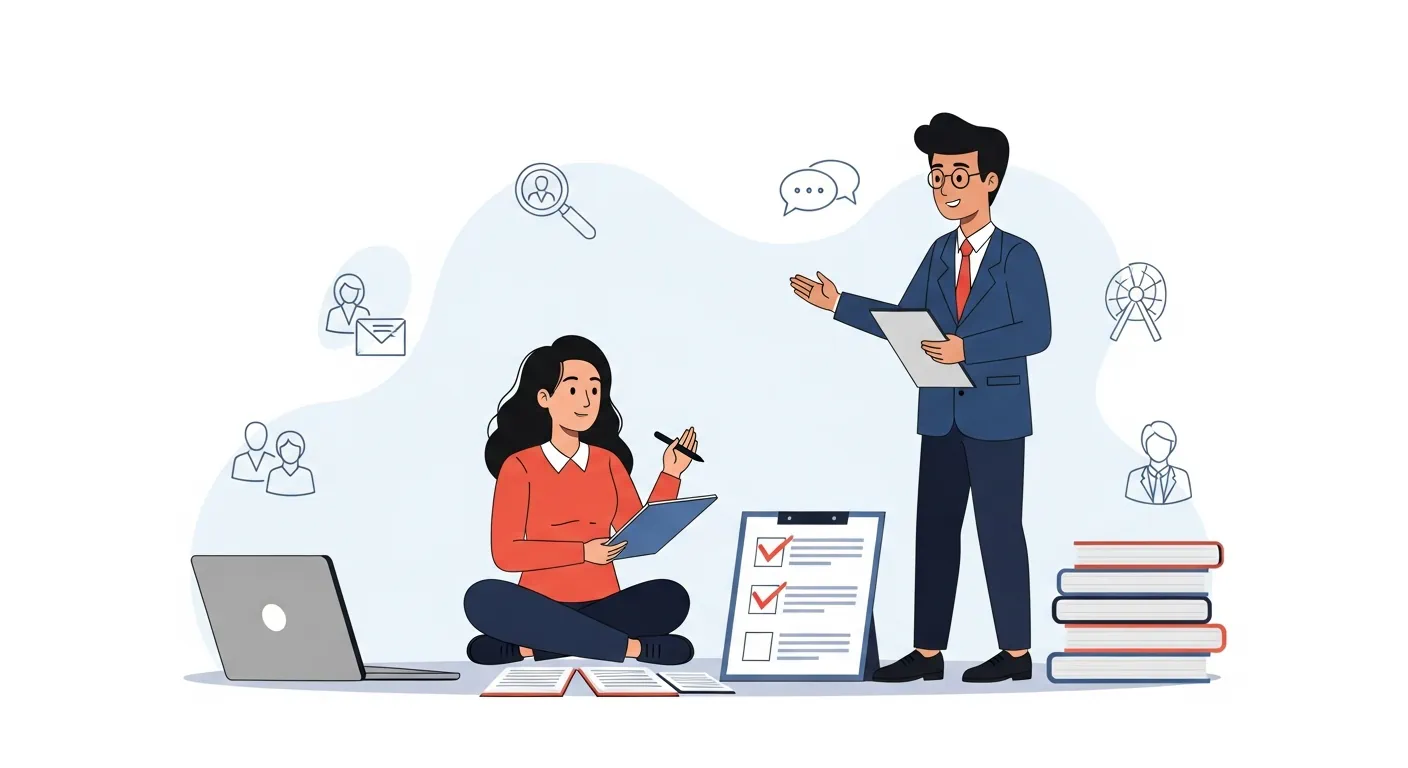
Unlock Your Potential: Mastering Common Interview Questions with Expert Answers
Landing your dream job often hinges on your performance during an interview. Understanding and preparing for common interview questions is a crucial step in showcasing your qualifications and suitability for a role. This guide provides expert strategies and sample answers to help you navigate the interview process with confidence. We'll cover frequently asked questions, offering insights on how to craft compelling responses that highlight your skills, experience, and personality. Preparing thoroughly can significantly boost your chances of success, turning a potentially nerve-wracking experience into an opportunity to shine.
Key Takeaways for Interview Success:
- Understand the 'Why': Know the underlying intent behind each question.
- STAR Method: Structure your answers with Situation, Task, Action, and Result.
- Tailor Your Responses: Align your answers with the specific job description.
- Show, Don't Just Tell: Use concrete examples to back up your claims.
- Be Authentic: Let your personality and enthusiasm for the role come through.
Navigating the Interview Landscape: Essential Questions and Expert Strategies
The interview is your chance to make a lasting impression. Recruiters and hiring managers use these conversations to assess not just your skills, but also your cultural fit and potential to grow within their organization. While every interview is unique, certain questions appear with remarkable frequency. By preparing for these common interview questions and expert answers for job seekers, you can reduce anxiety and present yourself in the best possible light. This section delves into some of the most prevalent queries and provides a framework for crafting effective responses.
H2: Tell Me About Yourself: Beyond the Resume
This is often the opening question, and it's more than just a request for your professional history. Interviewers want to understand your career trajectory, your key strengths, and why you're interested in this specific role.
Crafting Your Narrative
Your answer should be a concise, engaging summary (60-90 seconds) that highlights your most relevant experiences and skills. Think of it as your professional elevator pitch.
- Past: Briefly touch on your previous roles and key accomplishments.
- Present: Explain your current situation and what you're looking for.
- Future: Connect your aspirations to the opportunities this role offers.
Expert Tip: Avoid simply rehashing your resume. Instead, focus on how your experiences have prepared you for the challenges of the position you're applying for. For instance, instead of saying "I worked as a marketing associate," try "In my previous role as a marketing associate, I successfully managed social media campaigns that increased engagement by 25%, a skill I'm eager to leverage here."
H2: Why Are You Interested in This Role/Company?
This question assesses your motivation and whether you've done your homework. A generic answer won't cut it; you need to demonstrate genuine interest.
Showing Genuine Enthusiasm
Research the company's mission, values, recent projects, and industry standing. Connect these findings to your own career goals and interests.
- Company Fit: Mention specific aspects of the company culture or mission that resonate with you.
- Role Alignment: Explain how the responsibilities of the role align with your skills and career aspirations.
- Contribution: Articulate how you can contribute to the company's success.
Expert Tip: Highlight what excites you about the opportunity. Perhaps it's the innovative nature of their products, their commitment to sustainability, or the chance to work on a specific type of project. For example, "I've been following [Company Name]'s groundbreaking work in AI-driven analytics for the past year, and I'm particularly impressed by your recent initiative in [specific project]. The opportunity to contribute my skills in data visualization to such impactful projects is incredibly exciting."
H2: What Are Your Strengths?
This is your chance to showcase your most valuable assets. Don't just list generic qualities; tie them to the job requirements.
Demonstrating Relevant Strengths
Identify 2-3 strengths that are directly applicable to the job description. Provide specific examples to illustrate each strength.
- Skill-Based Strengths: Technical skills, problem-solving abilities, leadership.
- Soft Skills: Communication, teamwork, adaptability, time management.
- Evidence: Use the STAR method to provide concrete examples.
Expert Tip: Quantify your achievements whenever possible. For instance, "One of my key strengths is my ability to optimize workflows. In my previous role, I implemented a new project management system that reduced task completion time by 15% and improved team collaboration." You might find additional insights on developing this skill in articles about professional development.
H2: What Are Your Weaknesses?
This question is a test of self-awareness and your ability to grow. Be honest, but frame your weakness constructively.
Turning Weaknesses into Opportunities
Choose a genuine weakness that isn't a core requirement for the job. Crucially, explain how you are actively working to overcome it.
- Honesty with a Twist: Acknowledge a real area for improvement.
- Actionable Steps: Detail what you're doing to address it.
- Positive Spin: Show that you view it as a learning opportunity.
Expert Tip: Avoid clichés like "I'm a perfectionist" or "I work too hard." Instead, try something like, "In the past, I sometimes struggled with delegating tasks, as I wanted to ensure everything was done perfectly. I've since learned the importance of empowering my team and have been actively working on improving my delegation skills by providing clear instructions and trusting my colleagues' capabilities. This has led to better team efficiency and more balanced workloads." Learning to delegate effectively is a key component of leadership development.
H2: Where Do You See Yourself in 5 Years?
This question helps interviewers gauge your ambition, career goals, and whether your aspirations align with the company's growth opportunities.
Charting Your Future
Demonstrate that you've thought about your career path and that it involves growth within a similar industry or role.
- Growth and Development: Focus on acquiring new skills and taking on more responsibility.
- Company Alignment: Show how your future goals can be achieved within their organization.
- Ambition with Realism: Be aspirational but also grounded.
Expert Tip: Connect your long-term vision to the company's trajectory. For example, "In five years, I see myself having deepened my expertise in [specific area related to the role], potentially leading projects or mentoring junior team members. I'm particularly drawn to [Company Name] because of its commitment to innovation and employee development, and I believe there will be ample opportunities here to achieve these goals and contribute significantly."
H2: Describe a Challenging Project You Worked On and How You Handled It
This question uses the behavioral interview approach to understand your problem-solving skills, resilience, and approach to adversity.
The Power of the STAR Method
This is where the STAR method (Situation, Task, Action, Result) is indispensable.
- Situation: Briefly set the scene of the challenging project.
- Task: Explain your specific role and the goal you needed to achieve.
- Action: Detail the steps you took to overcome the challenges.
- Result: Describe the outcome of your actions, highlighting positive results.
Expert Tip: Focus on your actions and the lessons learned. Even if the project didn't have a perfectly successful outcome, emphasize what you gained from the experience. For instance, "During a critical product launch, we encountered unexpected technical issues that threatened our deadline. My task was to coordinate with the engineering and marketing teams to find a swift solution. I initiated daily stand-up meetings, facilitated open communication channels, and helped brainstorm alternative approaches. We managed to resolve the core issues within 48 hours, allowing for a slightly delayed but successful launch. The key takeaway for me was the critical importance of rapid, cross-functional communication under pressure."
H2: How Do You Handle Pressure or Stressful Situations?
Companies want to know if you can remain effective and calm when facing deadlines, demanding tasks, or unexpected problems.
Maintaining Composure Under Pressure
Highlight your coping mechanisms and your ability to maintain productivity.
- Proactive Strategies: Mention planning, prioritization, and time management.
- Reactive Strategies: Discuss staying calm, focused, and seeking support if needed.
- Positive Outcomes: Emphasize that you can still deliver quality work.
Expert Tip: Show that you have developed healthy strategies. "I approach stressful situations by first taking a moment to pause and assess the situation objectively. I then prioritize tasks based on urgency and impact, break down larger challenges into smaller, manageable steps, and focus on one thing at a time. I also believe in clear communication and seeking input from colleagues when appropriate. This structured approach helps me stay focused and productive, even during demanding periods." This aligns with principles of effective stress management discussed in professional development resources.
Differentiated Value: Beyond the Standard Interview Prep
While understanding common questions is essential, true interview success often comes from going a step further. Here are two key areas that set candidates apart, drawing from recent trends in talent acquisition.
1. Demonstrating Adaptability and a Growth Mindset in the Face of Rapid Change
The modern workplace is characterized by constant evolution. Employers are increasingly looking for candidates who don't just say they are adaptable but can show it through their experiences. This means highlighting instances where you've successfully learned new technologies, pivoted strategies due to market shifts, or embraced new methodologies. For example, citing your experience in learning a new programming language for a project or successfully adapting a marketing strategy based on emerging social media trends demonstrates this valuable trait. According to a 2024 report by the World Economic Forum, skills like active learning and learning strategies are projected to be among the most in-demand by 2027, emphasizing the need for candidates to showcase their capacity for continuous development.
2. Proactive Problem-Solving and Initiative
Many candidates can react to problems, but fewer can proactively identify and address potential issues before they arise. This involves demonstrating that you think critically about processes, anticipate roadblocks, and take initiative to improve outcomes. For instance, instead of waiting for a workflow to break, you might explain how you analyzed an existing process, identified a potential bottleneck, and proposed a more efficient solution that was subsequently implemented. A survey from [Industry Insights, 2025] indicated that hiring managers value candidates who demonstrate initiative and a proactive approach to problem-solving over those who simply wait for instructions, highlighting its importance in distinguishing top talent.
Frequently Asked Questions (FAQ)
Q1: What is the best way to prepare for an interview?
A: Thorough preparation involves researching the company and role, practicing answers to common questions using the STAR method, preparing insightful questions to ask the interviewer, and ensuring you are well-rested and dressed professionally.
Q2: How many questions should I prepare for?
A: Focus on understanding the types of questions asked and the underlying intent. While you can't predict every question, preparing for key categories like behavioral, situational, and technical questions will equip you to answer a wide range of inquiries effectively.
Q3: What if I don't know the answer to a question?
A: It's okay not to have all the answers. Be honest, admit you don't know, and then try to explain how you would go about finding the answer or what your initial thoughts might be. This shows your problem-solving process.
Q4: Should I ask questions at the end of the interview?
A: Absolutely. Asking thoughtful questions demonstrates your engagement, interest, and that you've done your research. Prepare 2-3 questions about the role, team, company culture, or future opportunities.
Your Next Steps Towards Interview Mastery
Successfully navigating interviews is a skill that can be honed with practice and strategic preparation. By understanding the common interview questions and applying the expert answers and strategies outlined in this guide, you'll be well-equipped to showcase your qualifications and make a memorable impression. Remember to tailor your responses, highlight your unique value, and let your enthusiasm for the role shine through.
We encourage you to share your own interview experiences and tips in the comments below! What questions have you found most challenging or rewarding? If you found this guide helpful, consider subscribing for more career advice and insights. For further exploration, dive deeper into articles on behavioral interviewing techniques or strategies for understanding company culture.
Information Timeliness: Content updated on December 26, 2025. The information presented reflects current best practices in interview preparation as of late 2025. Recommendations for updates include annual reviews to incorporate evolving interview trends and changes in hiring methodologies.
Expandable Subtopics for Future Updates:
- Virtual Interview Best Practices: Techniques for succeeding in online interviews.
- Industry-Specific Interview Questions: Deep dives into common questions for tech, healthcare, finance, etc.
- Negotiating Salary and Benefits: Strategies for discussing compensation post-interview.